This past month, I think I’ve read more books than I have in a long time. It helped that we took a mini four-day vacation at the Lake of the Ozarks, and since we had to take the dogs, it sort of curtailed what we could do, so I got a lot of reading done. I did get to spend a little time at the pool, but it was very hot, and I didn’t want to burn places that generally never see the light of day.
Since I’m terrible at writing reviews or synopses, all descriptions are from the Amazon website (where I get all my used books).
So the books I’ve read…
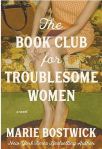 The Bookclub for Troublesome Women (my selection for the book club in October) by Marie Bostwick
By 1960s standards, Margaret Ryan is living the American woman’s dream. She has a husband, three children, a station wagon, and a home in Concordia–one of Northern Virginia’s most exclusive and picturesque suburbs. She has a standing invitation to the neighborhood coffee klatch, and now, thanks to her husband, a new subscription to A Woman’s Place–a magazine that tells housewives like Margaret exactly who to be and what to buy. On paper, she has it all. So why doesn’t that feel like enough?
Margaret is thrown for a loop when she first meets Charlotte Gustafson, Concordia’s newest and most intriguing resident. As an excuse to be in the mysterious Charlotte’s orbit, Margaret concocts a book club get-together and invites two other neighborhood women–Bitsy and Viv–to the inaugural meeting. As the women share secrets, cocktails, and their honest reactions to the controversial bestseller The Feminine Mystique, they begin to discover that the American dream they’d been sold isn’t all roses and sunshine–and that their secret longing for more is something they share. Nicknaming themselves the Bettys, after Betty Friedan, these four friends have no idea their impromptu club and the books they read together will become the glue that helps them hold fast through tears, triumphs, angst, and arguments–and what will prove to be the most consequential and freeing year of their lives.
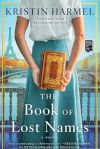 The Book of Lost Names by Kristin Harmel
Eva Traube Abrams, a semi-retired librarian in Florida, is shelving books when her eyes lock on a photograph in the New York Times. She freezes; it’s an image of a book she hasn’t seen in more than sixty years—a book she recognizes as The Book of Lost Names.
The accompanying article discusses the looting of libraries by the Nazis across Europe during World War II—an experience Eva remembers well—and the search to reunite people with the texts taken from them so long ago. The book in the photograph, an eighteenth-century religious text thought to have been taken from France in the waning days of the war, is one of the most fascinating cases. Now housed in Berlin’s Zentral- und Landesbibliothek library, it appears to contain some sort of code, but researchers don’t know where it came from—or what the code means. Only Eva holds the answer, but does she have the strength to revisit old memories?
As a graduate student in 1942, Eva was forced to flee Paris and find refuge in a small mountain town in the Free Zone, where she began forging identity documents for Jewish children fleeing to neutral Switzerland. But erasing people comes with a price, and along with a mysterious, handsome forger named Rémy, Eva decides she must find a way to preserve the real names of the children who are too young to remember who they really are. The records they keep in The Book of Lost Names will become even more vital when the resistance cell they work for is betrayed and Rémy disappears.
An engaging and evocative novel reminiscent of The Lost Girls of Paris and The Alice Network, The Book of Lost Names is a testament to the resilience of the human spirit and the power of bravery and love in the face of evil.
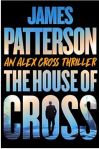 The House of Cross, James Patterson (Book 33 of 34 Alex Cross)
The president-elect is tapping the country’s brightest legal minds as candidates for the Supreme Court.
Then one of them is gunned down.
Another is stabbed.
A third is murdered near midnight on a city street.
Now it’s up to Detective Alex Cross, the FBI’s top expert in criminal behavior, to go inside the mind of a diabolical killer and protect the country’s best hope for justice.
Currently reading now, our book club selection for this month:
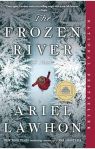 The Frozen River, by Ariel Lawhon.
Maine, 1789: When the Kennebec River freezes, entombing a man in the ice, Martha Ballard is summoned to examine the body and determine cause of death. As a midwife and healer, she is privy to much of what goes on behind closed doors in Hallowell. Her diary is a record of every birth and death, crime and debacle that unfolds in the close-knit community. Months earlier, Martha documented the details of an alleged rape committed by two of the town’s most respected gentlemen—one of whom has now been found dead in the ice. But when a local physician undermines her conclusion, declaring the death to be an accident, Martha is forced to investigate the shocking murder on her own.
Over the course of one winter, as the trial nears, and whispers and prejudices mount, Martha doggedly pursues the truth. Her diary soon lands at the center of the scandal, implicating those she loves, and compelling Martha to decide where her own loyalties lie.
Clever, layered, and subversive, Ariel Lawhon’s newest offering introduces an unsung heroine who refused to accept anything less than justice at a time when women were considered best seen and not heard. The Frozen River is a thrilling, tense, and tender story about a remarkable woman who left an unparalleled legacy yet remains nearly forgotten to this day.
Also on my shelf for reading is
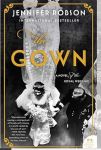 The Gown, A Novel of the Royal Wedding by Jennifer Robson
London, 1947: Besieged by the harshest winter in living memory, burdened by onerous shortages and rationing, the people of postwar Britain are enduring lives of quiet desperation despite their nation’s recent victory. Among them are Ann Hughes and Miriam Dassin, embroiderers at the famed Mayfair fashion house of Norman Hartnell. Together they forge an unlikely friendship, but their nascent hopes for a brighter future are tested when they are chosen for a once-in-a-lifetime honor: taking part in the creation of Princess Elizabeth’s wedding gown.
Toronto, 2016: More than half a century later, Heather Mackenzie seeks to unravel the mystery of a set of embroidered flowers, a legacy from her late grandmother. How did her beloved Nan, a woman who never spoke of her old life in Britain, come to possess the priceless embroideries that so closely resemble the motifs on the stunning gown worn by Queen Elizabeth II at her wedding almost seventy years before? And what was her Nan’s connection to the celebrated textile artist and holocaust survivor Miriam Dassin?
With The Gown, Jennifer Robson takes us inside the workrooms where one of the most famous wedding gowns in history was created. Balancing behind-the-scenes details with a sweeping portrait of a society left reeling by the calamitous costs of victory, she introduces readers to three unforgettable heroines, their points of view alternating and intersecting throughout its pages, whose lives are woven together by the pain of survival, the bonds of friendship, and the redemptive power of love.
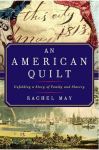 An American Quilt by Rachel May
Rachel May’s rich new book explores the far reach of slavery, from New England to the Caribbean, the role it played in the growth of mercantile America, and the bonds between the agrarian south and the industrial north in the antebellum era—all through the discovery of a remarkable quilt. While studying objects in a textile collection, May opened a veritable treasure-trove: a carefully folded, unfinished quilt made of 1830sera fabrics, its backing containing fragile, aged papers with the dates 1798, 1808, and 1813, the words “shuger,” “rum,” “casks,” and “West Indies,” repeated over and over, along with “friendship,” “kindness,” “government,” and “incident.” The quilt top sent her on a journey to piece together the story of Minerva, Eliza, Jane, and Juba—the enslaved women behind the quilt—and their owner, Susan Crouch. May brilliantly stitches together the often-silenced legacy of slavery by revealing the lives of these urban enslaved women and their world. Beautifully written and richly imagined, An American Quilt is a luminous historical examination and an appreciation of a craft that provides such a tactile connection to the past.
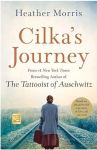 Cilka’s Journey by Heather Morris
Cilka is just sixteen years old when she is taken to Auschwitz-Birkenau Concentration Camp in 1942, where the commandant immediately notices how beautiful she is. Forcibly separated from the other women prisoners, Cilka learns quickly that power, even unwillingly taken, equals survival.
When the war is over and the camp is liberated, freedom is not granted to Cilka: She is charged as a collaborator for sleeping with the enemy and sent to a Siberian prison camp. But did she really have a choice? And where do the lines of morality lie for Cilka, who was send to Auschwitz when she was still a child?
In Siberia, Cilka faces challenges both new and horribly familiar, including the unwanted attention of the guards. But when she meets a kind female doctor, Cilka is taken under her wing and begins to tend to the ill in the camp, struggling to care for them under brutal conditions.
Confronting death and terror daily, Cilka discovers a strength she never knew she had. And when she begins to tentatively form bonds and relationships in this harsh, new reality, Cilka finds that despite everything that has happened to her, there is room in her heart for love.
From child to woman, from woman to healer, Cilka’s journey illuminates the resilience of the human spirit―and the will we have to survive.
I’ve also been working on a counted cross-stitch project I started…over 25 years ago, for the Great Hunter’s and my wedding…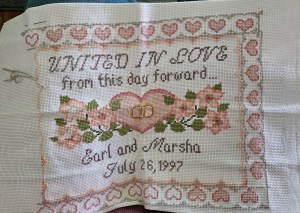
revamped my living room ceiling fan…
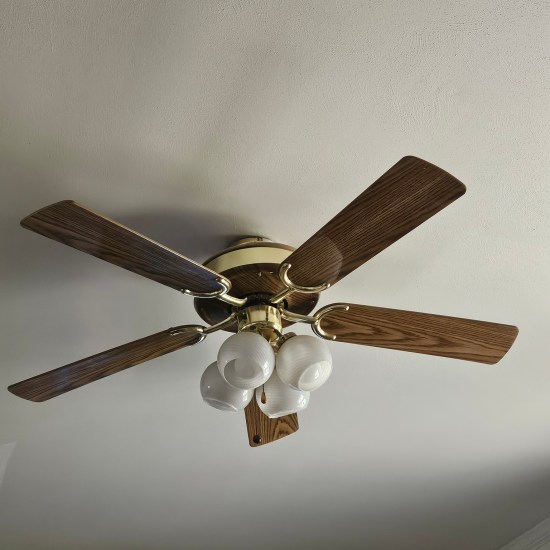
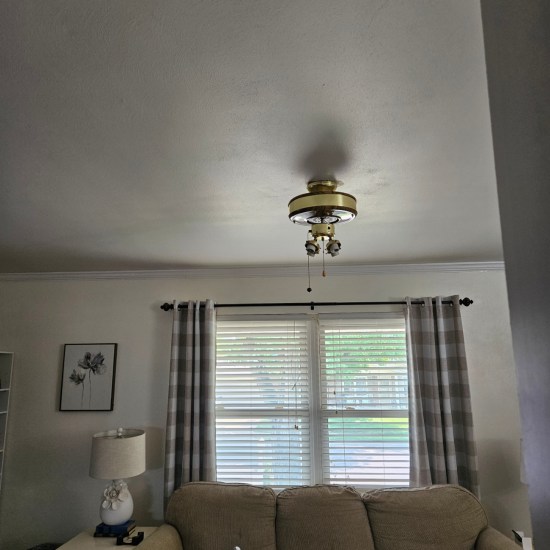
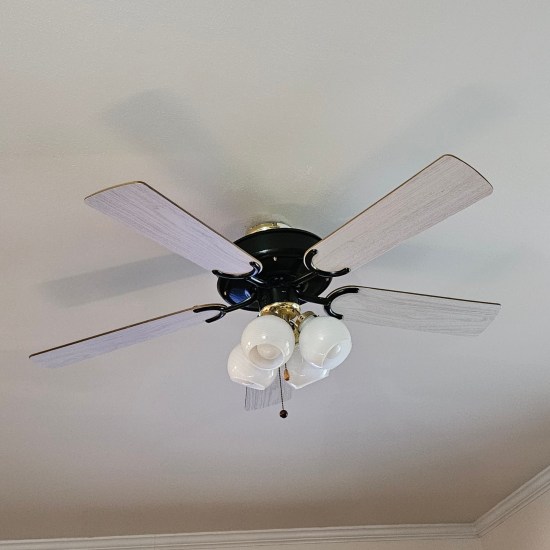
and bought and put together tall skinny shelves to abut the larger living room shelves,
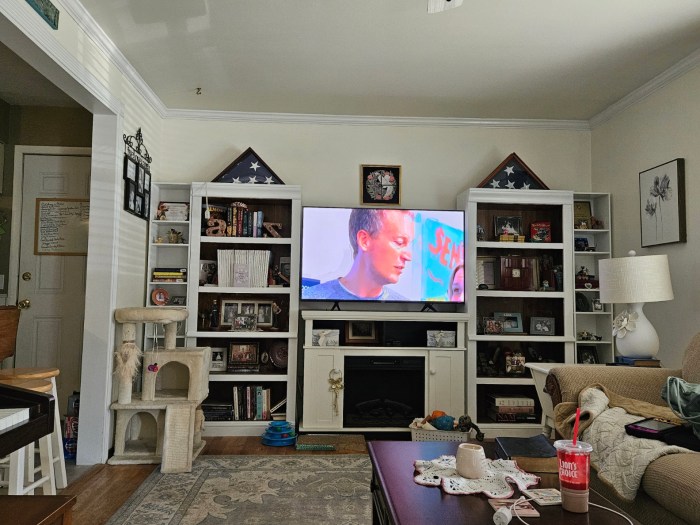
all the while being fashionably dressed.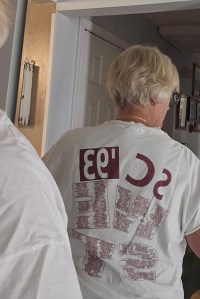
 Carpediemdona.com