 I think I wrote a couple of weeks ago about the different “ologists” I’ve been seeing over the past five years. Before March 2019, I had only been to see my primary care doc, my lady doc (and that was rare) and feet and knee docs. I have been fortunately healthy (still am realistically). When I was first diagnosed with Atrial Fibrillation, I saw my first “ologist”, an electrophysiologist. Over the next five years, each time I had a procedure, either a cardioversion or an ablation, I had CBC blood work done.
A CBC (complete blood count) is a routine blood test that measures the red and white blood cells and plasma (among other things). Each time I got the results, the results came back abnormal. It showed either high hematocrit (the percentage of red blood cells in the total blood plasma), high hemoglobin (a protein found in red blood cells that carries oxygen throughout the body), and/or high red blood cells count. The electrophysiologist never mentioned this and from what I’ve learned since then, “ologists” don’t seem to pay much attention to anything on tests they have run that do not affect their treatment.
Anyway, I graduated from my electrophysiologist and my pulmonologist in August, with both saying I didn’t have to come back for a year. That only left the hematologist, the blood doctor I was finally referred to late last year by my Primary Care Physician after she ran the CBC blood test and saw the abnormal results. Since the results of my blood work have continually been abnormal the hematologist requested a special blood test, JAK-2. My insurance company denied approval for the JAK-2 blood test, which would have determined if I had just regular old polycythemia (a condition characterized by an abnormally high number of red blood cells in the blood) or if I had the more serious form of polycythemia, polycythemia vera, which is a form of blood cancer. My hematologist told me then that another way to get the same results would be through a bone marrow biopsy which she knew the insurance company would approve. (From what I understand, if regular Medicare approves a procedure, an insurance company can’t deny it.)
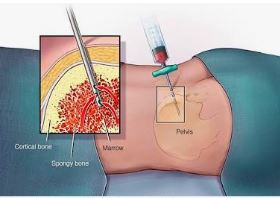
I had read that the bone marrow biopsy was a painful procedure because only the skin and tissue were numbed and then a long needle is inserted into the hip bone to draw out the marrow. I did not want that. When I was in the office last month, I told the doctor that I wanted to wait another three months before I consented to this test in the hopes that my next test results would be normal. She ordered a blood test to be repeated in a month and a follow-up appointment for December.
I had the blood work done last week and again my levels were abnormal and just a little higher than last month. But in the meantime, I had learned that the bone marrow biopsy test is done under sedation, not just numbing. That was a game-changer for me. I’ve been sedated at least a dozen times in the last five years and it has always been a piece of cake (as long as they can find the vein).
I emailed the doctor and told her I was ready to have the bone marrow biopsy done now instead of waiting. Not only for the reason that she thought I should have it done, but also, as with everything else, the cost to me is going up in January.
The test is set for next Thursday morning. It’s a short procedure and I should be in and out in about an hour and a half with just a little residual soreness in my hip.
I’ll let you know.
 Carpediemdona.com